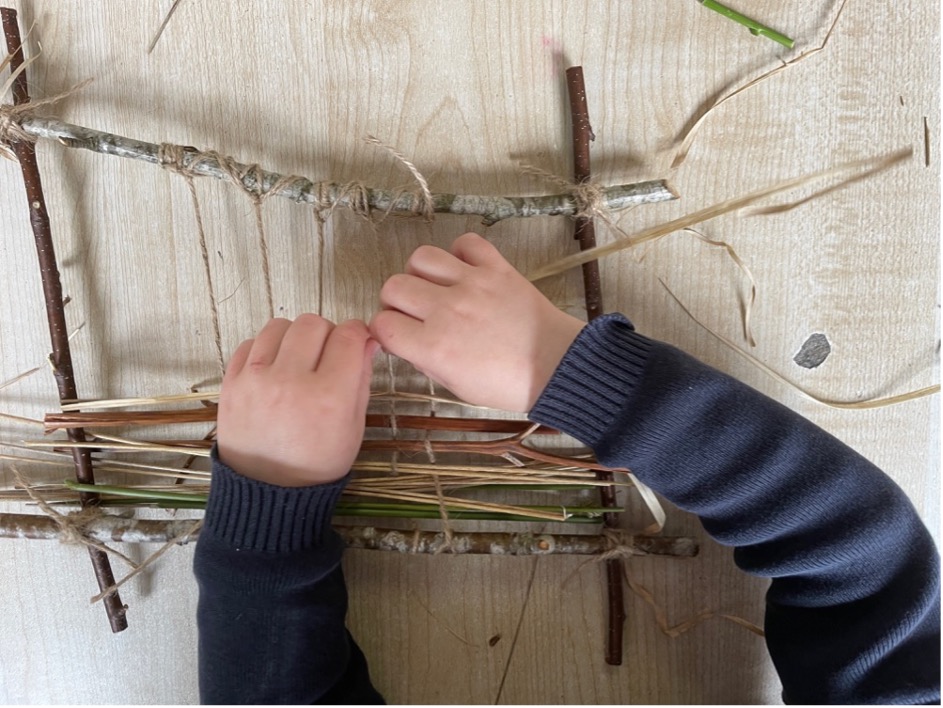
and rushes, Molinia grass, bracken, etc from Drummin Bog. Created by students of St Brendan’s National School, Drummond, South County Carlow.

‘The Lizard Mat’
By Jules Michael
Webpage design: Cathy Fitzgerald
Following on from my time on Gnáthóga Nádúrtha | Natural Habitats (2021 – 2024), early in 2025, I was delighted to be awarded a research grant by Creative Ireland Carlow.
Entitled The Lizard Mat, this grant allowed that rare and valuable opportunity of a specific period of time: time to reflect on the many strands to that preceding innovative project of Gnáthóga Nádúrtha; but also, more importantly, time to research potential themes to proceed with in the future – in that accumulating way that this kind of work provokes.
Focusing on the idea of ‘old stories, new stories’ was a continuation of themes we three artists had woven into
Gnáthóga Nádúrtha.
Monica de Bath brings (amongst other methods) weaving practices, the Irish language and Bridéog-making customs into her process of connecting with peatlands communities around Rathangan, Co. Kildare.
Kate Flood excavates herbal teas and what she terms ‘bog prescriptions’ in her recipes derived from wild plants and plant lore, as part of her discussions during her connecting with communities around Girley Bog, Co. Meath.
For my part, I looked at old farming customs of butter-making, and artefacts woven from straw in the conversations that ran as part of Drummin Bog connecting with its hinterland and community
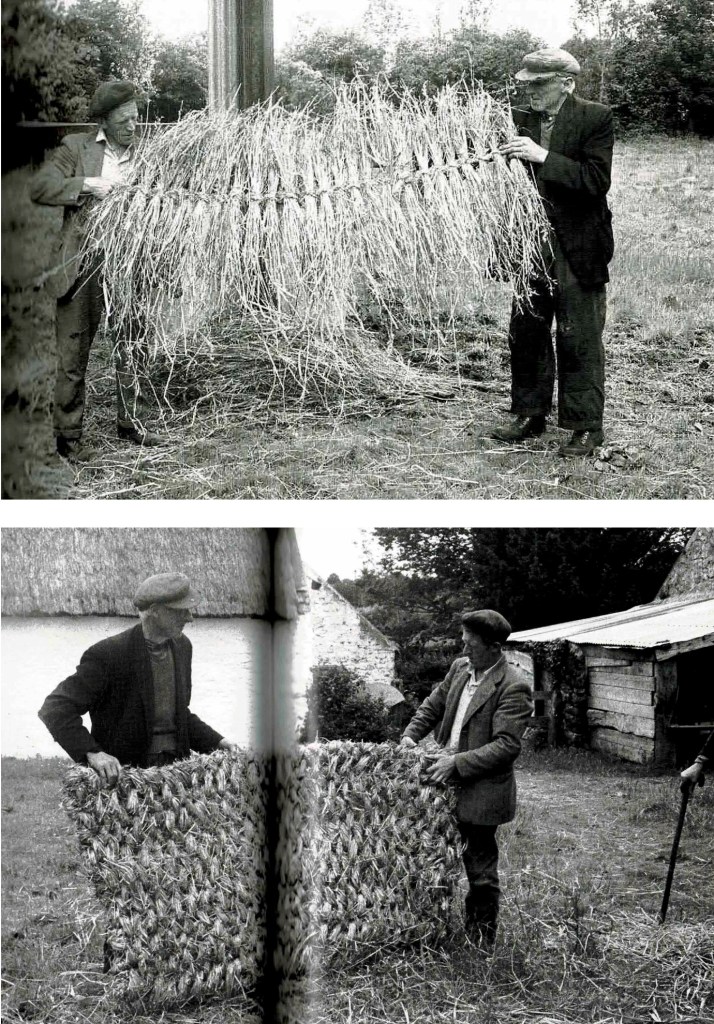
The Lizard Mat became a new and fresh opportunity to pull out specific relevant strands from the earlier work that I wanted to develop, in particular close reading of Anne O’Dowd’s seminal book Straw, Hay and Rushes in Irish Folk Tradition.
Some ecoart inspiration from my colleague Dr Cathy Fitzgerald, also with the Drummin Bob Project
The book is an in-depth written history of a myriad of vernacular objects made from organic materials – straw, hay and rushes – and their associated uses and customs. It also contains an enormous visual reservoir of old photos, illustrated drawings and listings of artefacts held across the National Museum Collection.
In particular, two photos of two men making a straw mat triggered links for me that referenced a previous email conversation I had with herpetologist Rob Gandola (Irish Herpetological Society).
Rob and I had been discussing lizards, their particular requirements for basking areas, and possible locations for monitoring same on Drummin Bog. I had asked about the potential for placing some kind of mat on the peat.
Rob noted that mats “…may offer good refugia for animals that will like the humidity underneath an absorbent cover…newts and frogs may be the main net beneficiaries here although lizards do need humid microhabitats to help them shed their skin, drink, feed etc.”
‘Refugia’ became the key word. It became the springboard idea for underpinning the old story of traditional customs associated with straw mat making (as mattresses, door openings or floor coverings), with the newer story of making mats as a shelter for fauna on Drummin Bog.
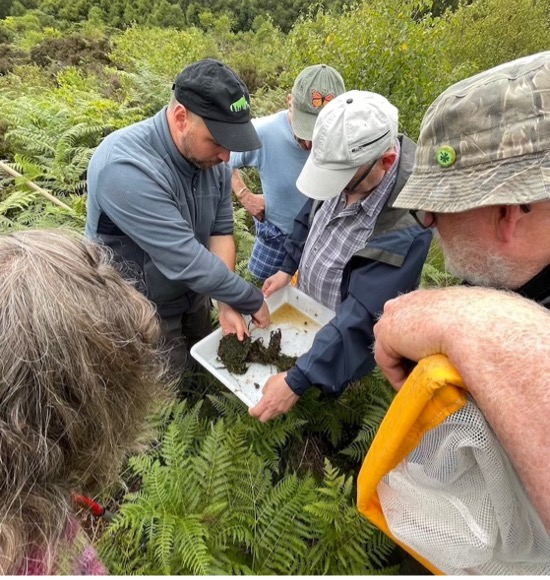
Drummin Bog, 2023
Material Research at the National Museum of Ireland, Turlough Park
As part of the Lizard Mat, in October 2024 I spent time with Kate and Monica in the National Museum of Ireland, Turlough Park, that magnificent resource of vernacular artefacts.
The complete immersion in its wonderful library, the access to the Handling Collection and also to particular requested artefacts in the archives – with the great generosity and help of the museum staff throughout – made for an invigorating and profoundly rich three days.
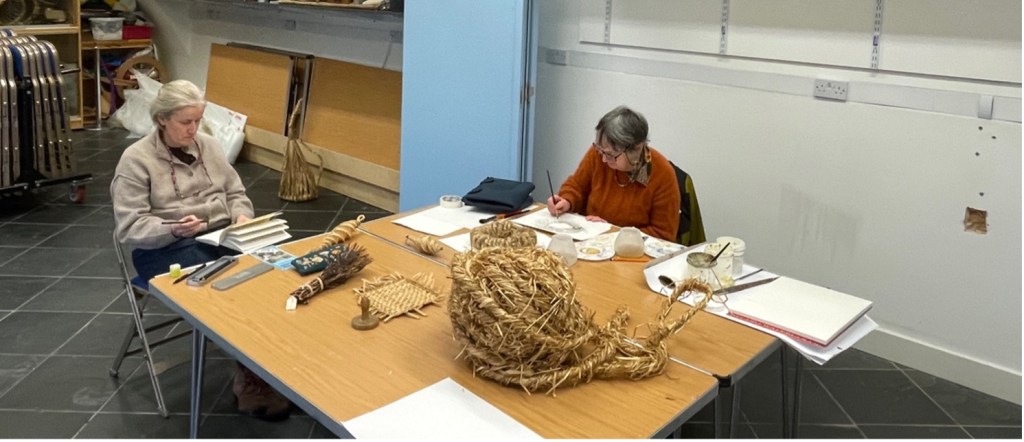
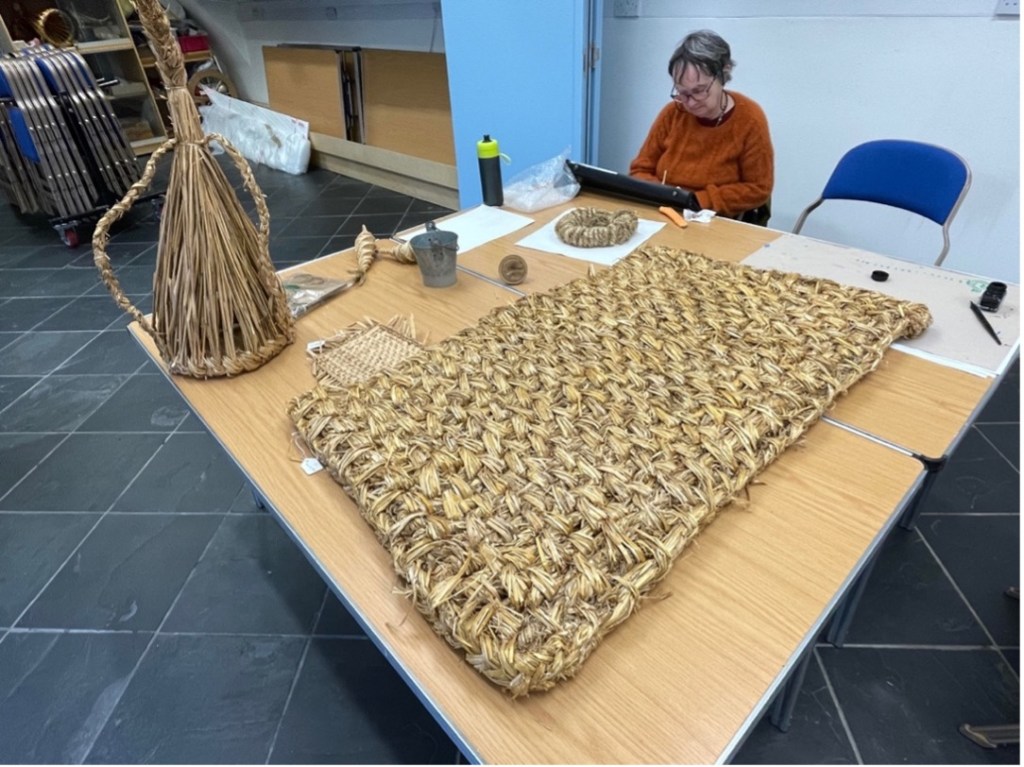
Straw mat in the foreground. Originally, these were used for floor covers, door openings, under mattresses, etc. The idea of a mat links to the artist Jules Michael’s original idea stemming from a conversation with Rob and the idea of a mat, or ‘refugia’, being placed on Drummin Bog as a potential refuge, or shelter, for lizards and/or micro-invertebrates. Photo: Jules Michael
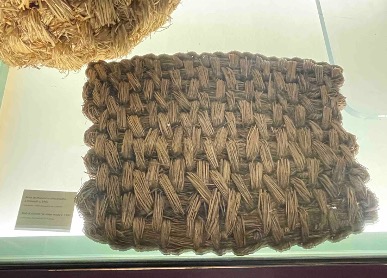
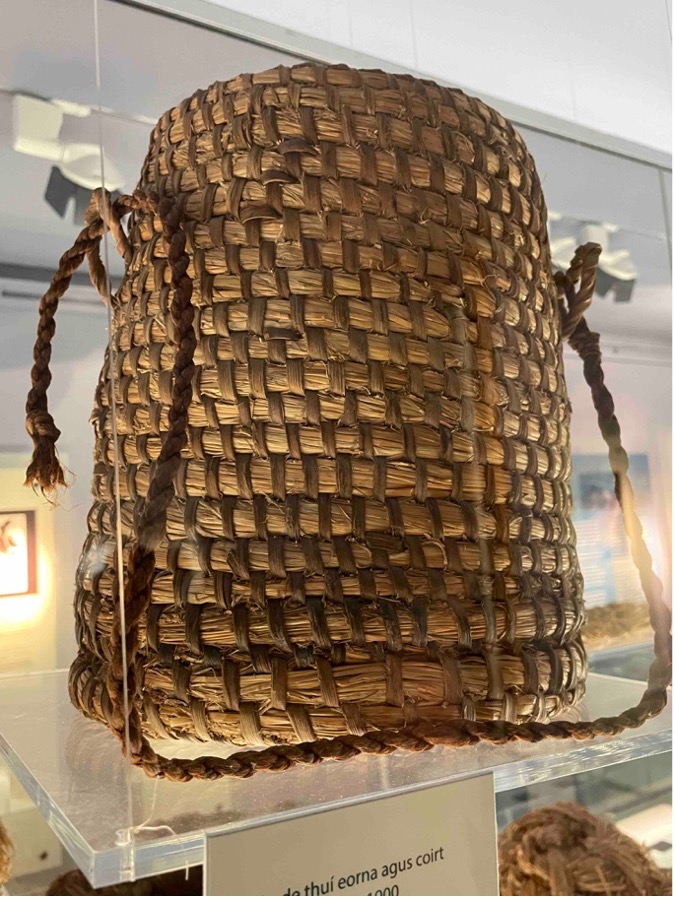
National Museum of Ireland, Turlough Park.
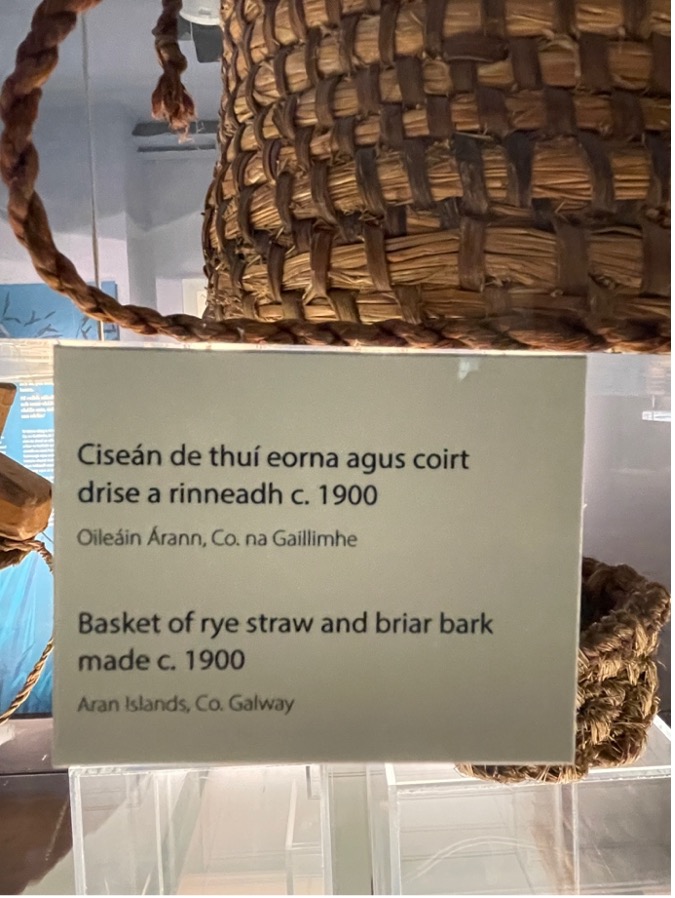
A strand, I think, for future excavation; and a memo, too, that briars and brambles are a terrific habitat for protection, shelter and as a food source.
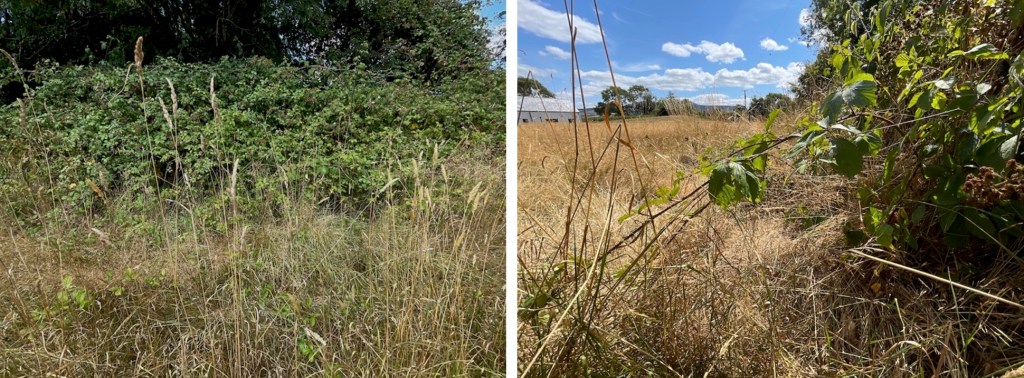
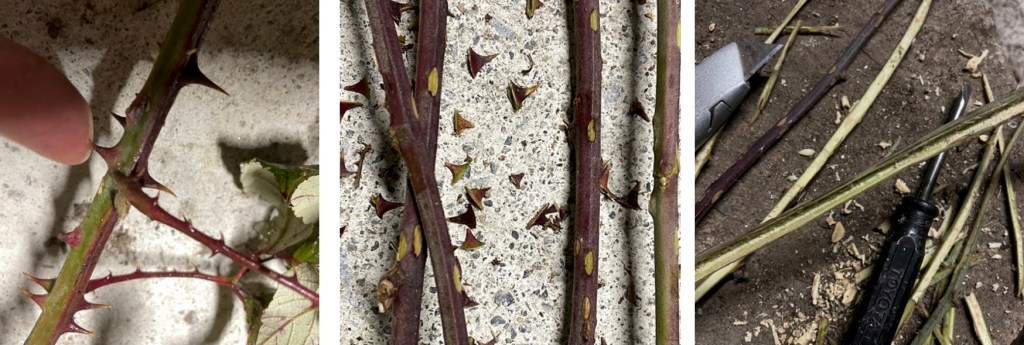
This may be feasible for a small project; but not for an entire school!
Bringing the Lizard Mat to school?
To signify The Lizard Mat outside of the written and visual research, a creative action was initiated with St. Brendan’s National School, Drummond, Co. Carlow, during May 2025.
Over the years, through previous Creative Ireland Carlow-funded projects for the Creative Drummin programme, we have built up a warm and ongoing relationship between this welcoming two-teacher school of approx. 32 – 35 pupils and Drummin Bog.
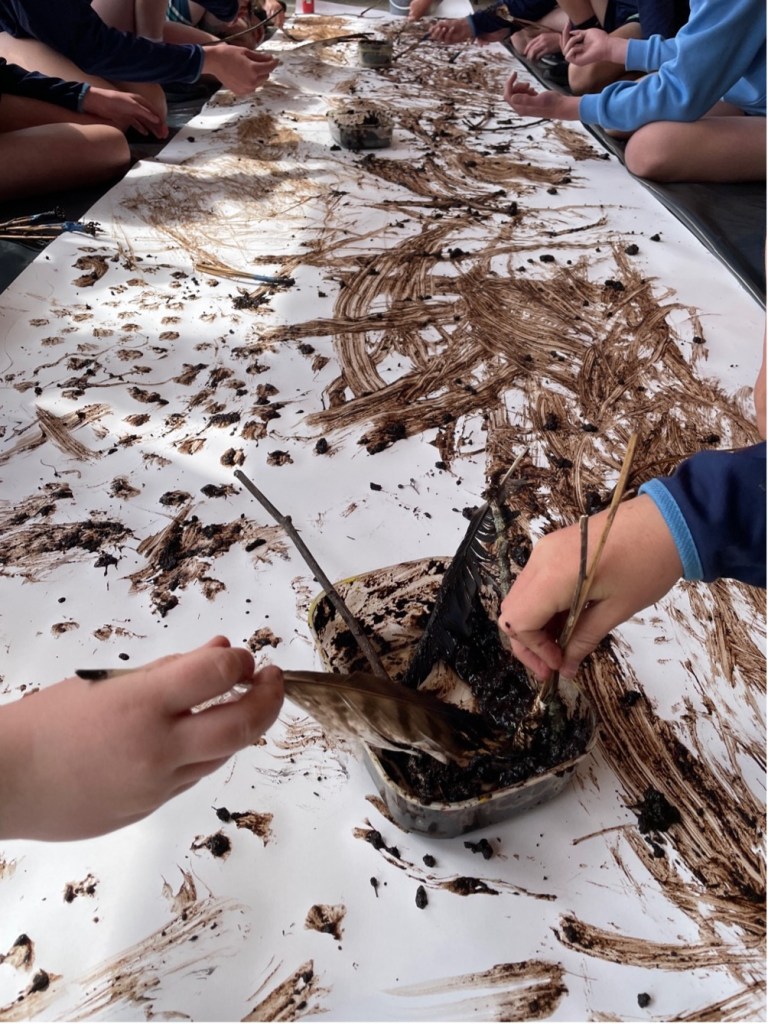
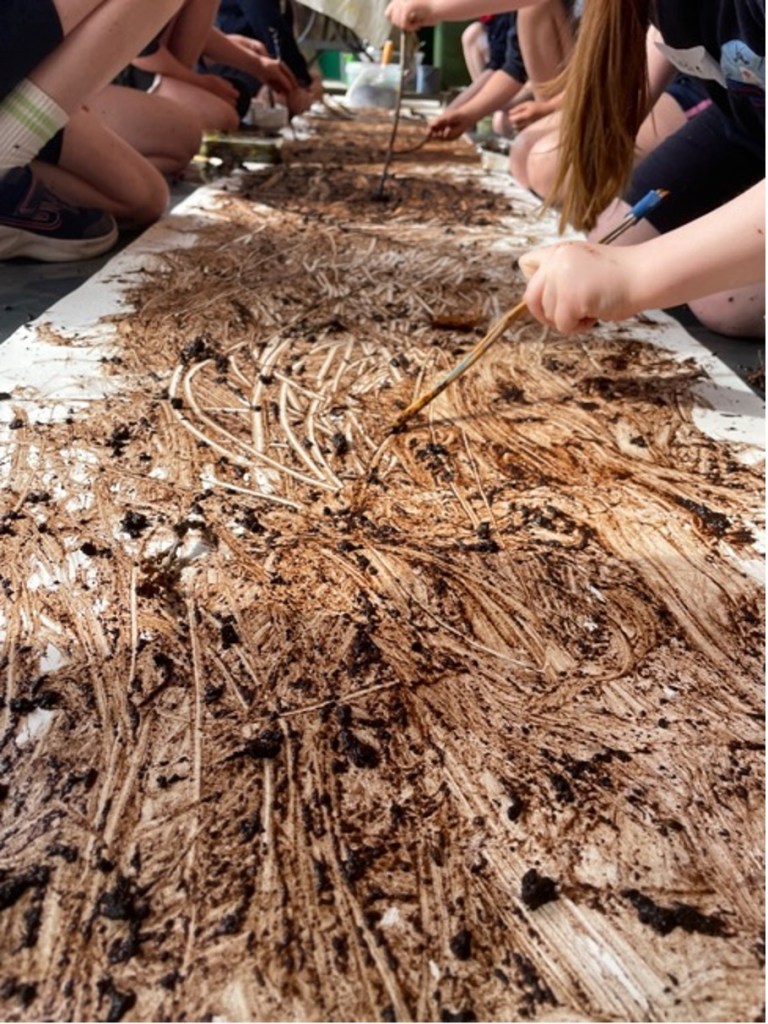
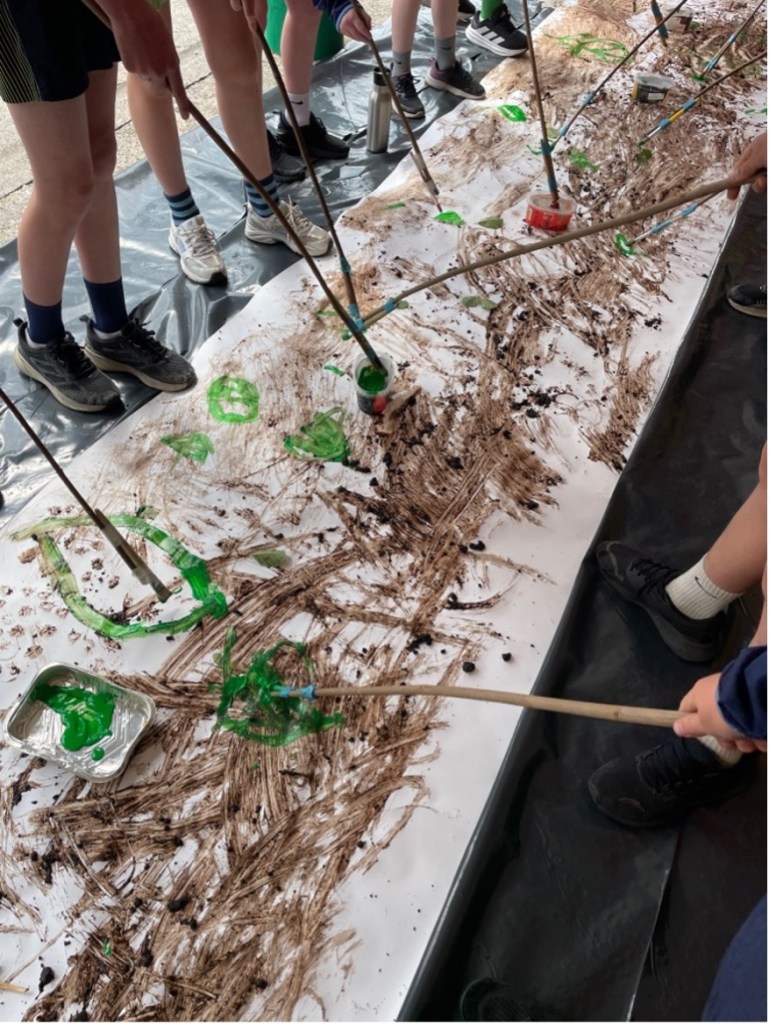
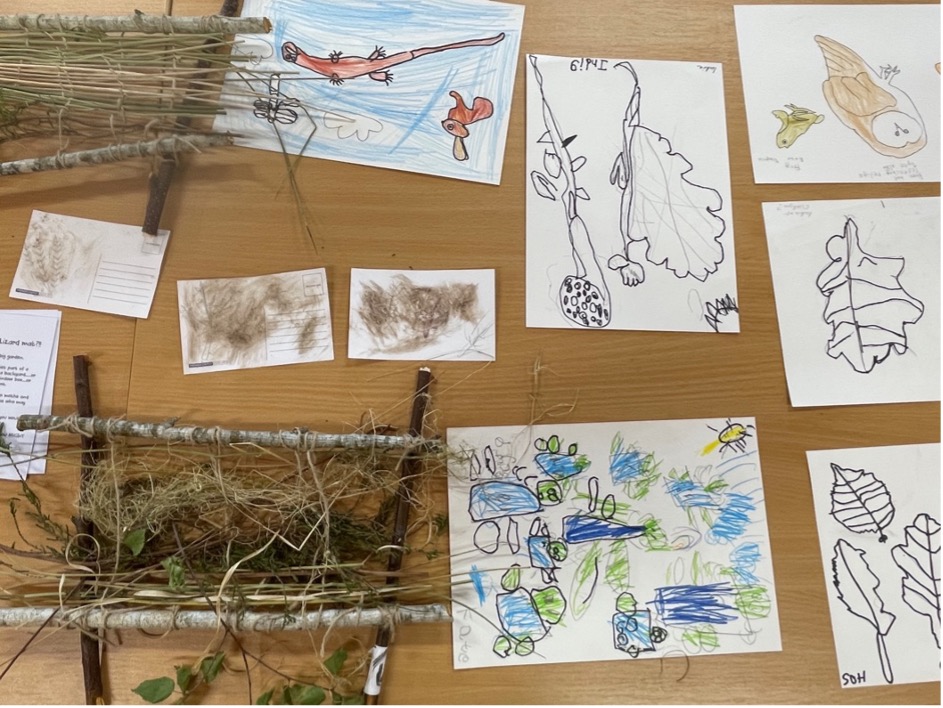
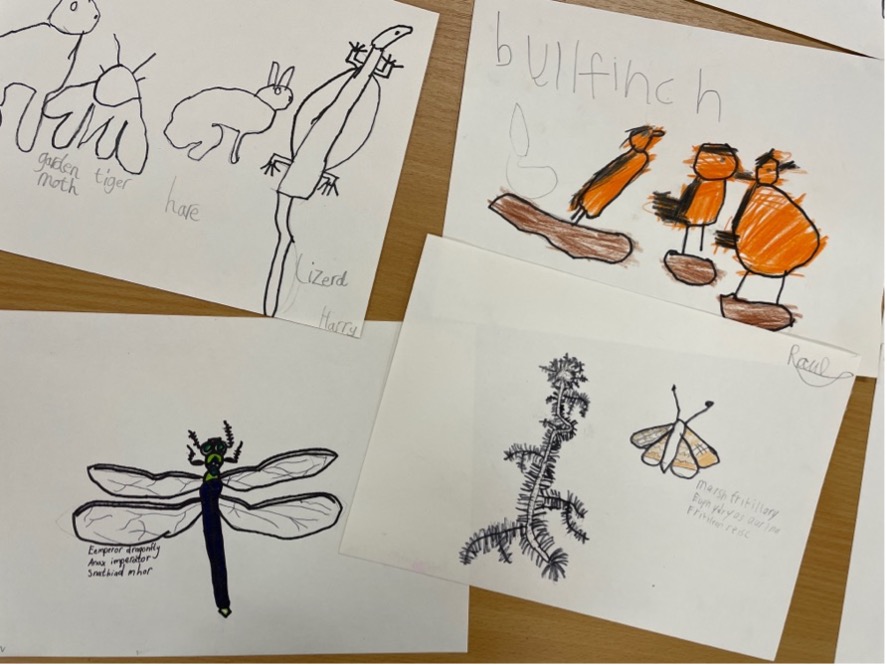
For The Lizard Mat, I devised a drawing program using a range of materials, ways of making marks including observational drawing, and with wild plants and flora and fauna cards as source material (with names in English, Latin and Irish), also including large-scale abstract mark-making (with ‘peat-paint’ and drawing tools made from Drummin Bog twigs and dried material).
The pupils also wove their own individual ‘lizard mats’.
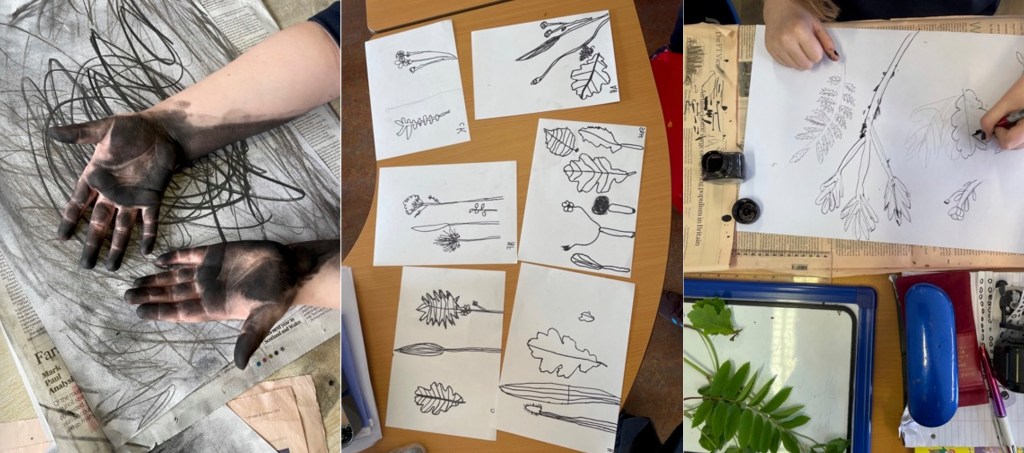
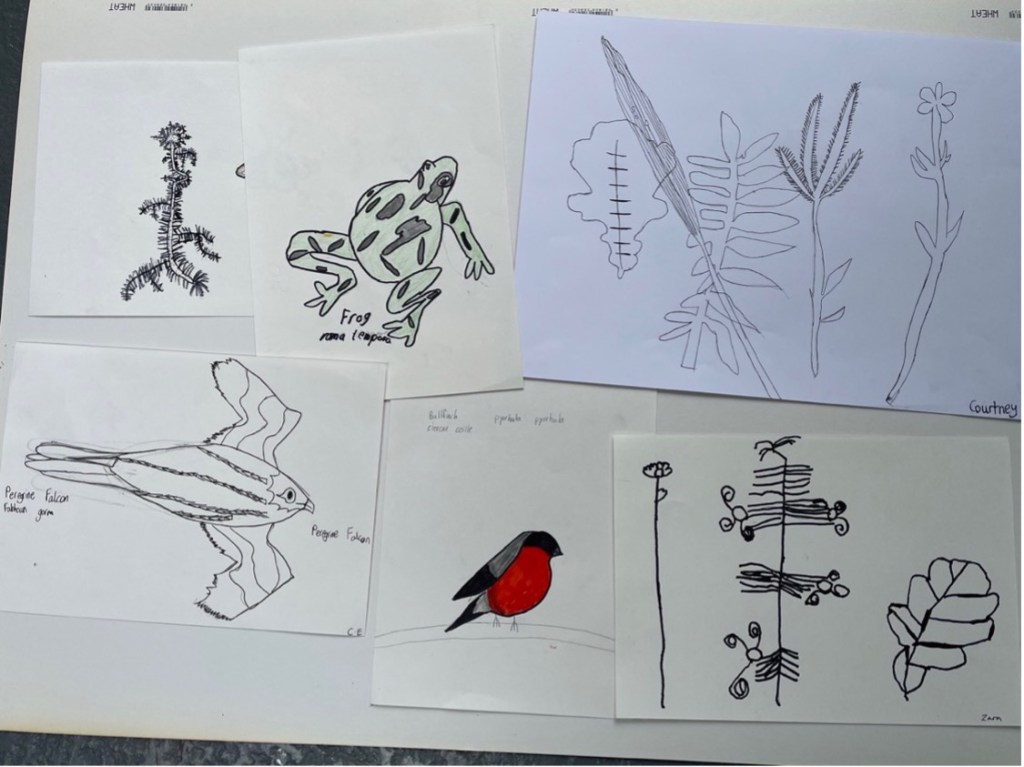
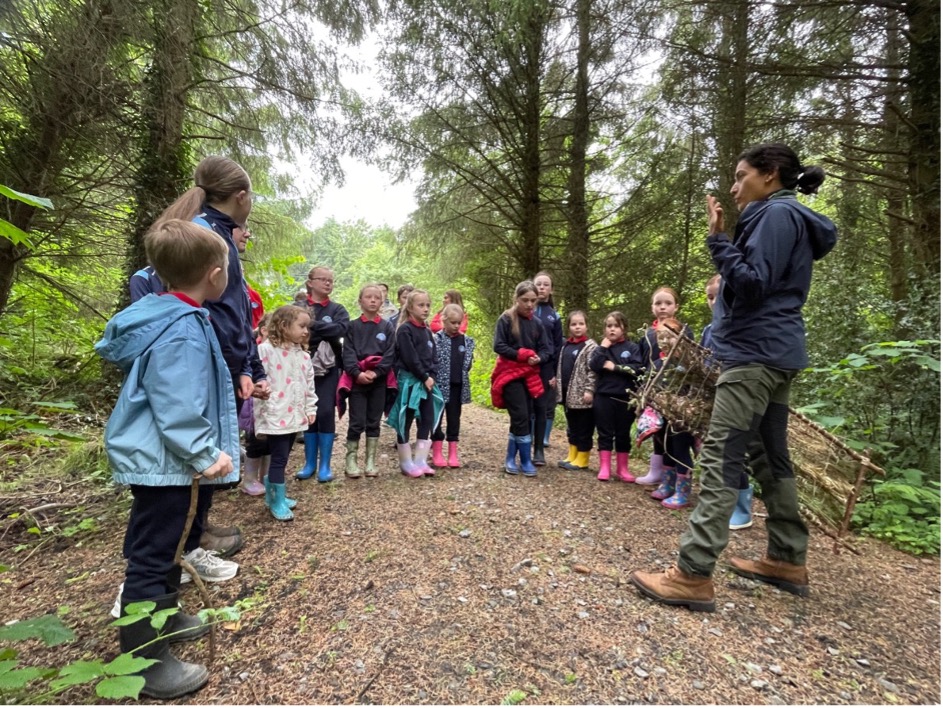
To keep the creative time in the school in context, we also visited Drummin Bog – the pupils’ favourite part!!
Tasneem Khan from SEASchool https://www.seaschool.ie/ collaborated with me on this, leading off with a science walk with the children to discuss the various habitats we moved through.
Tas also set up a mini-lab on site, with sphagnum moss and water samples for the children (and teachers!) to examine.
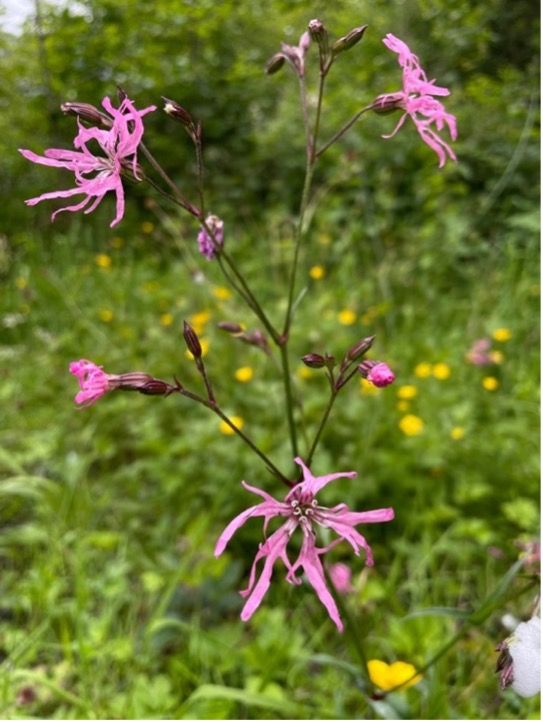
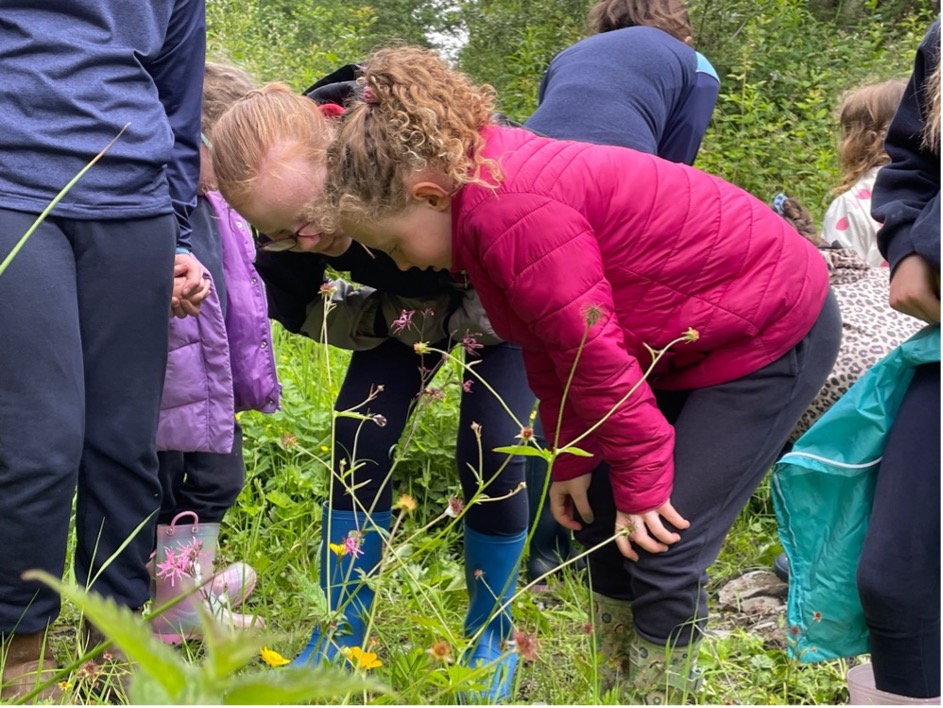
Ragged-Robin on Drummin Bog; much loved by butterflies – among them our Common Blue – and long-tongued bees, who feed on the nectar produced by the plant.
With the draining of marsh and wetlands, Ragged-Robin is no longer as common as it once was.
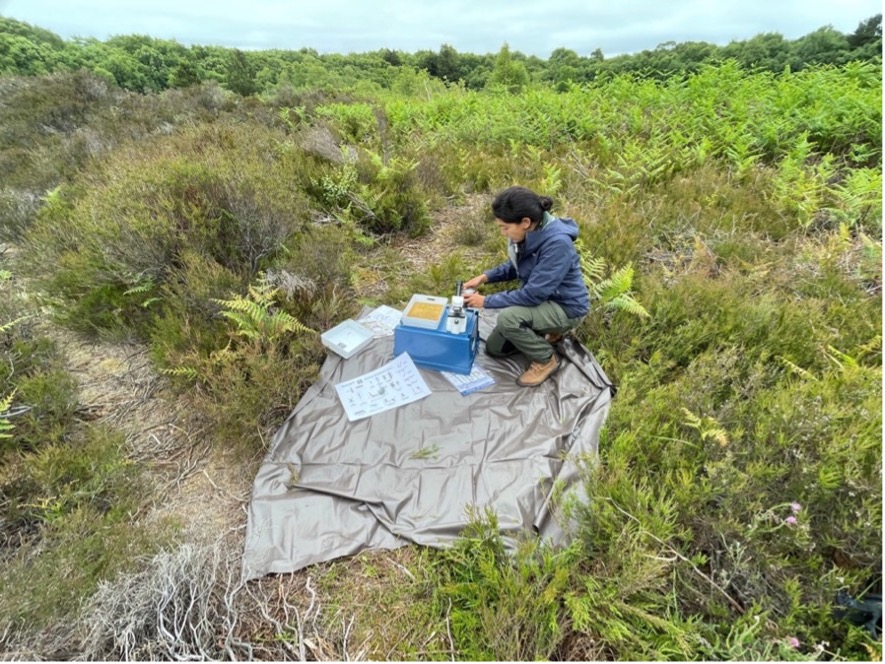
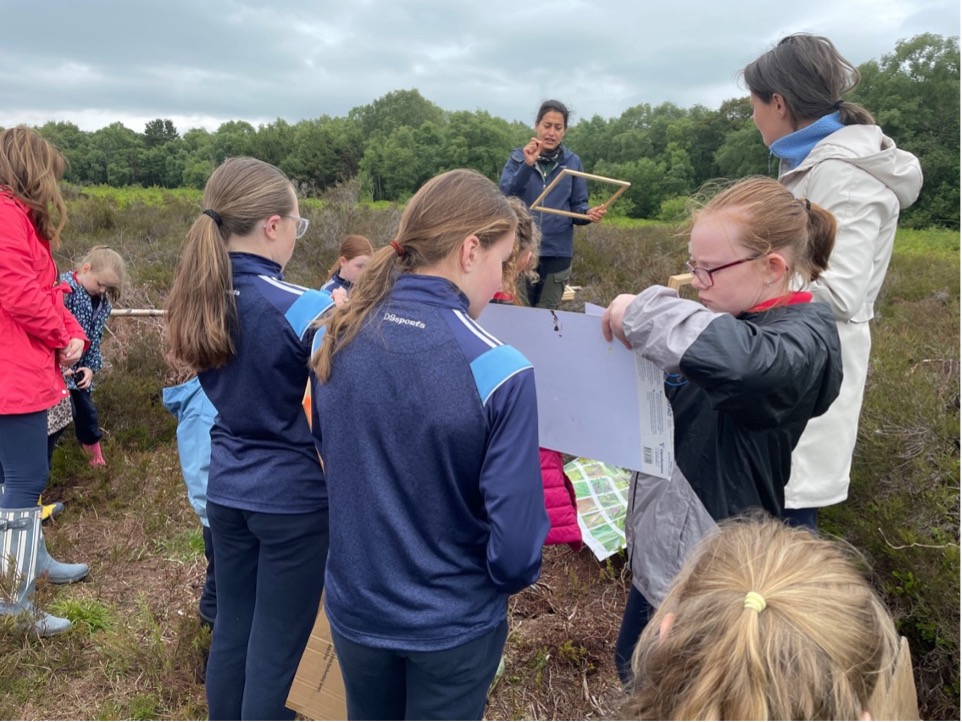
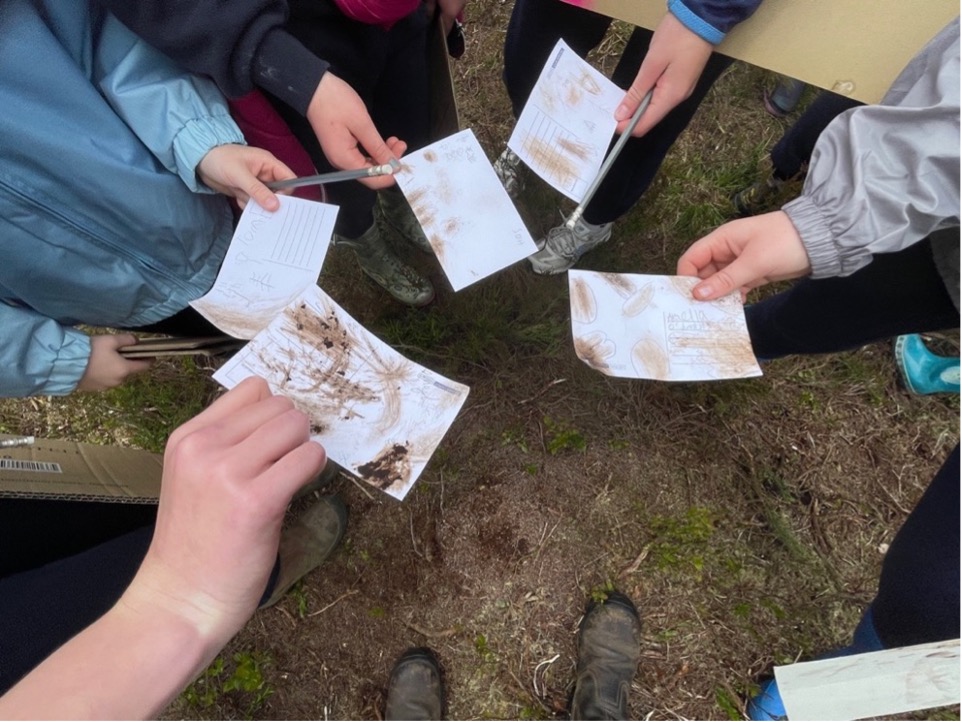
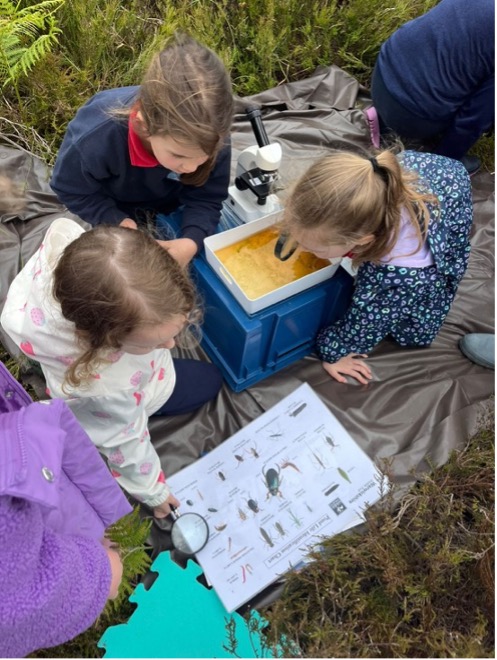
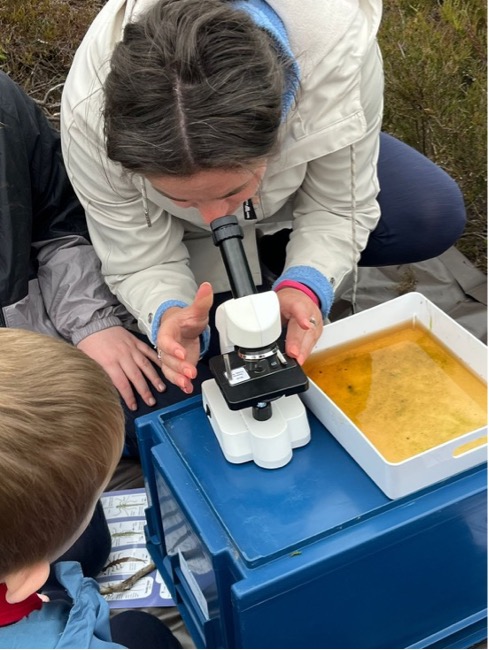
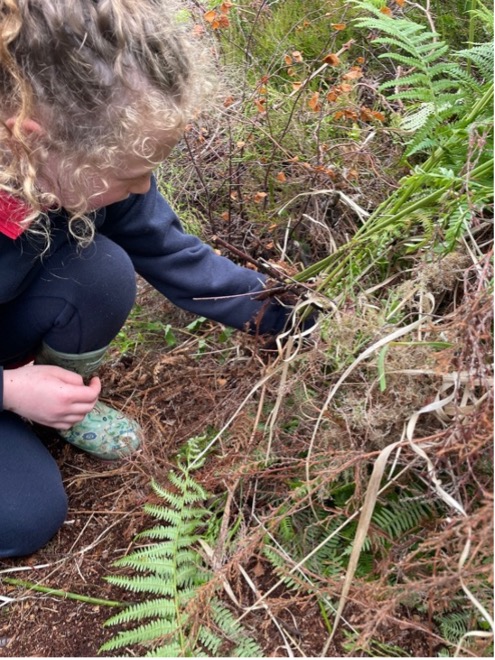
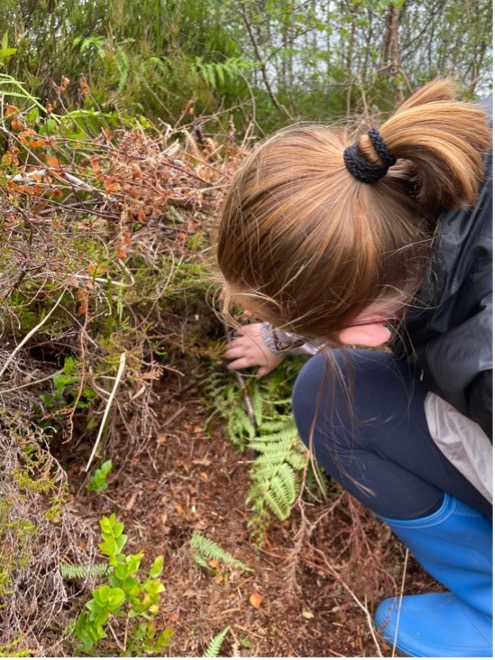
Making shelters, or refugia, on Drummin Bog.
We made our own Drummin Bog versions of straw mats.
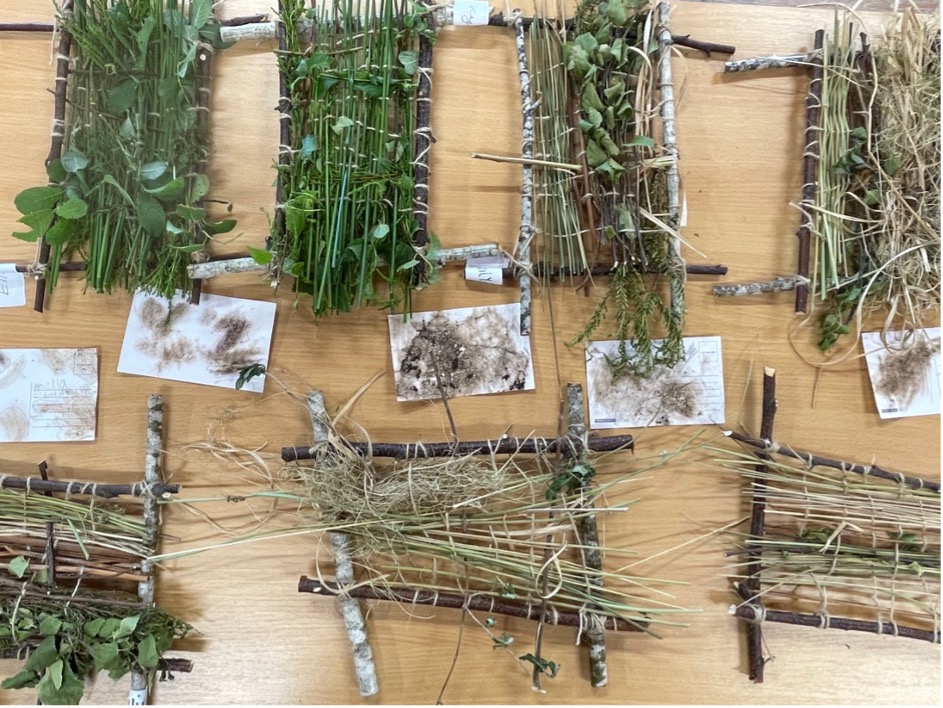
Considering it not appropriate to bring straw onto this special peatlands habitat, and in looking for ways to connect the pupils to the organic material of Drummin Bog, I made up small weavers’ frames from birch and rowan harvested from the bog’s perimeters, with undyed and biodegradable jute string.
Each child thus had a weaving frame to make their own version of a ‘lizard mat’, incorporating plants found on this special site – common rush, Molinia grass, birch leaves, heather, bracken, bilberry stems.
As we worked, we spoke about the idea of ‘refugia’ and Drummin Bog as a refuge – a home, a shelter – for both plants specific to peatlands, but also to flora and fauna from the surrounding landscape.
We integrated the idea that Drummin Bog is physically connected to the school grounds and to our own homes and gardens by the hedgerows, walls and ditches we pass by every day; that these are corridors for the critters, the birds, the flora to move through – and that we too are all part of this connected ecosystem.
To finish, the children took home each of their individual small frames to locate as a refugium in a window box, or plant pot, or at the bottom of their own gardens.
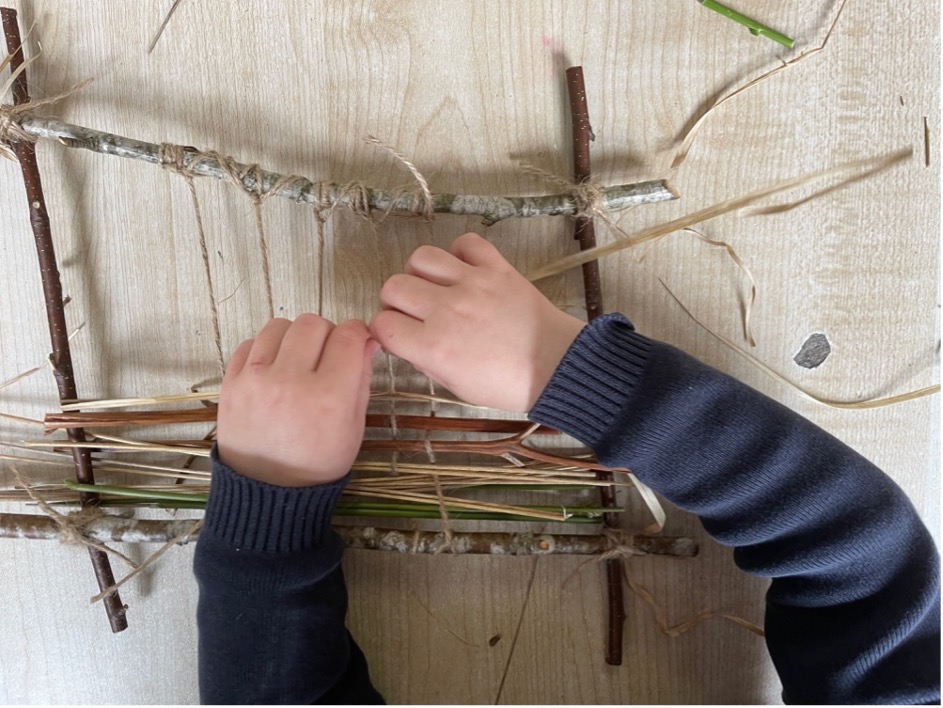
and rushes, Molinia grass, bracken etc from Drummin Bog.
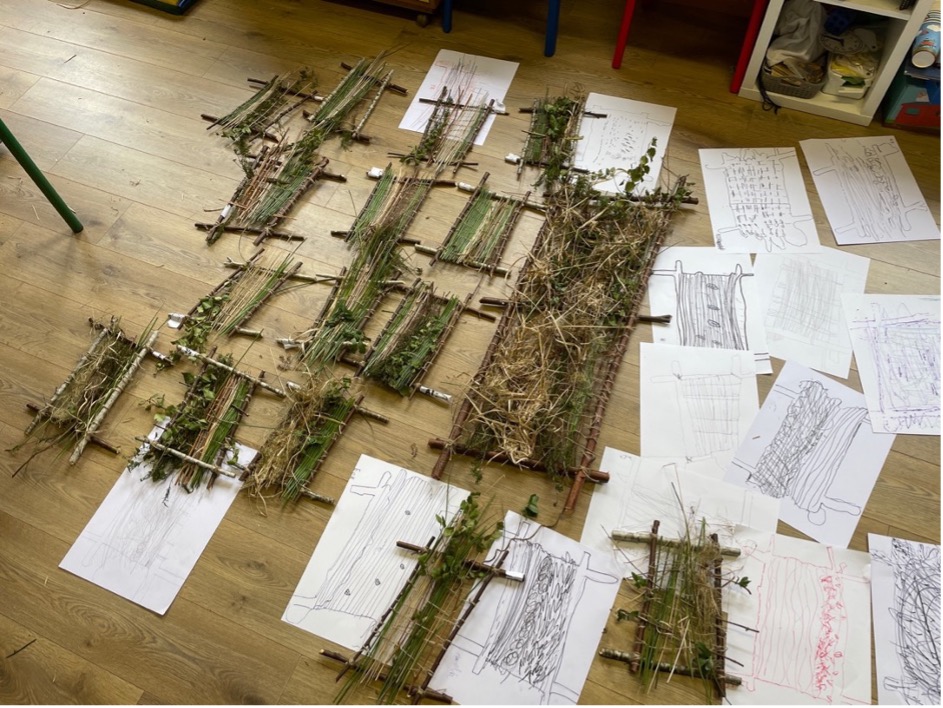
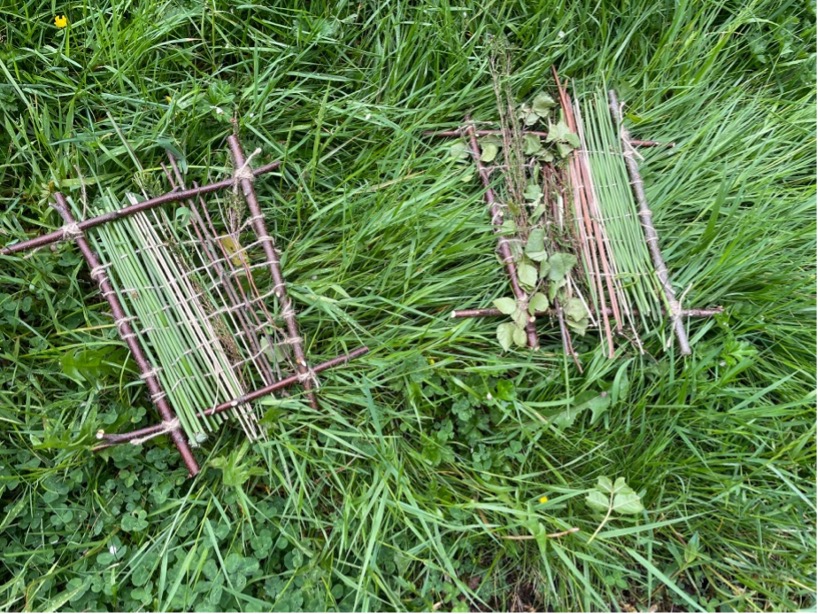
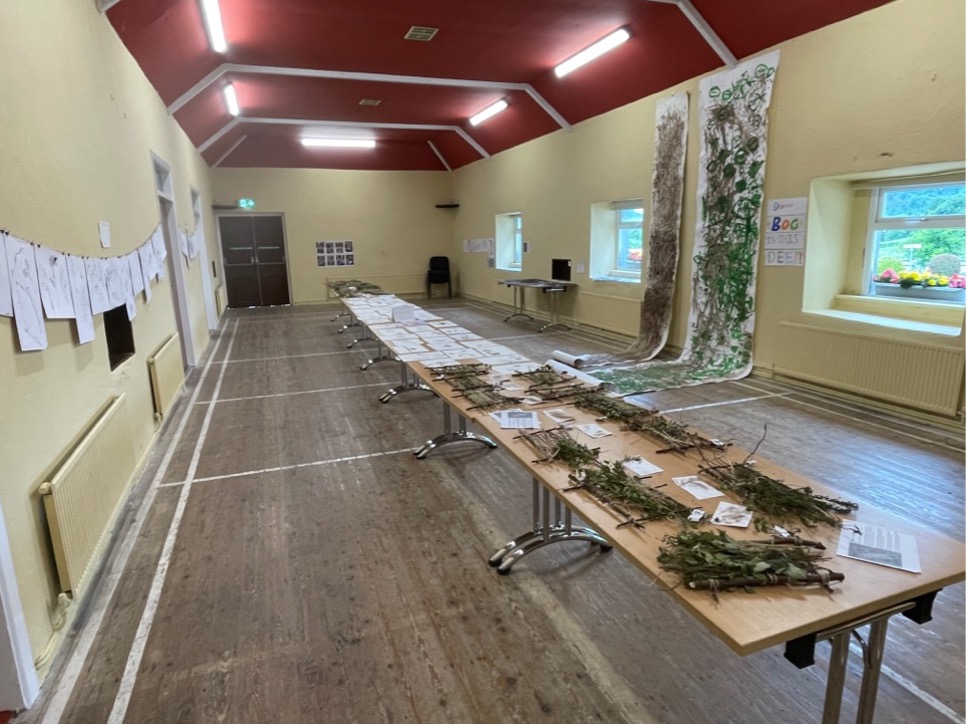
A celebratory Lizard Mat Exhibition at Drummond Hall
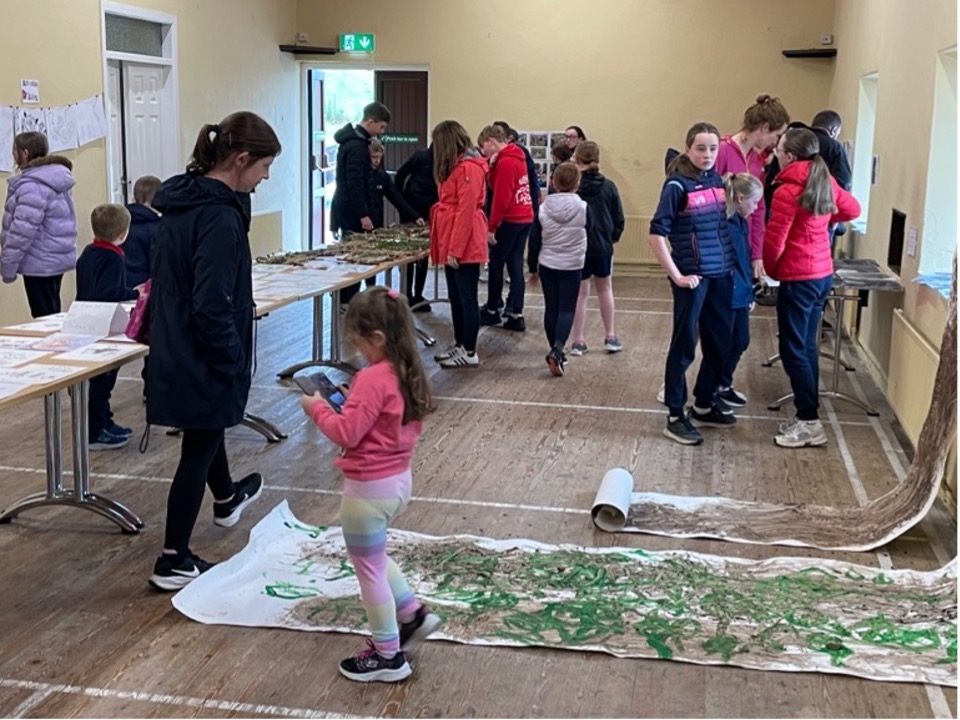
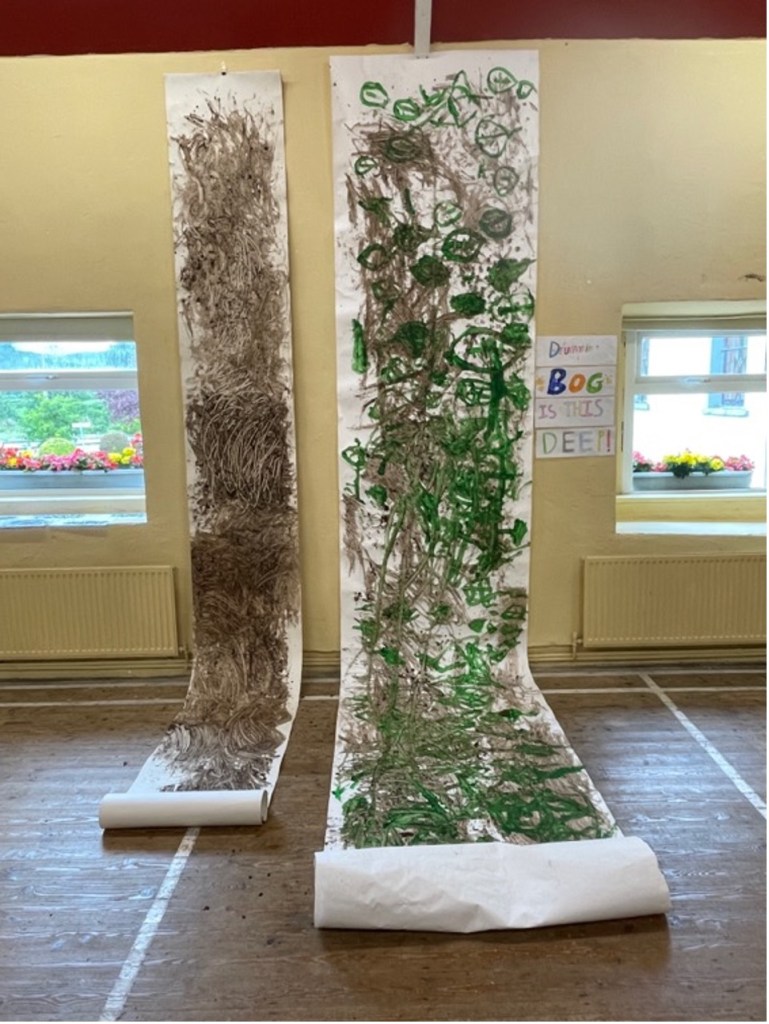
The hands-on creative aspect of The Lizard Mat culminated in staging an exhibition in Drummond Hall of the children’s artworks, in a celebration for their families and friends of the children’s botanical and observational drawings, their unique individual Lizard Mats and the two communal peat drawings. These peat drawings were 8 and 10 metres long each!! reflecting the potential depth of peat that Drummin Bog would once have had as a pristine raised bog.
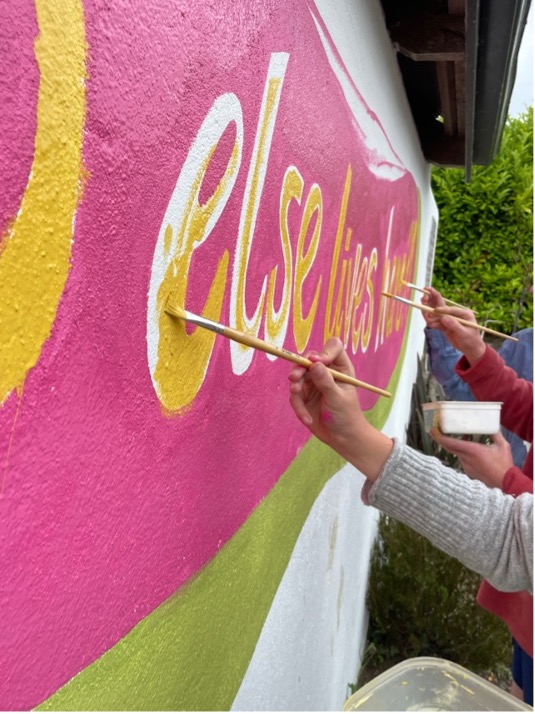
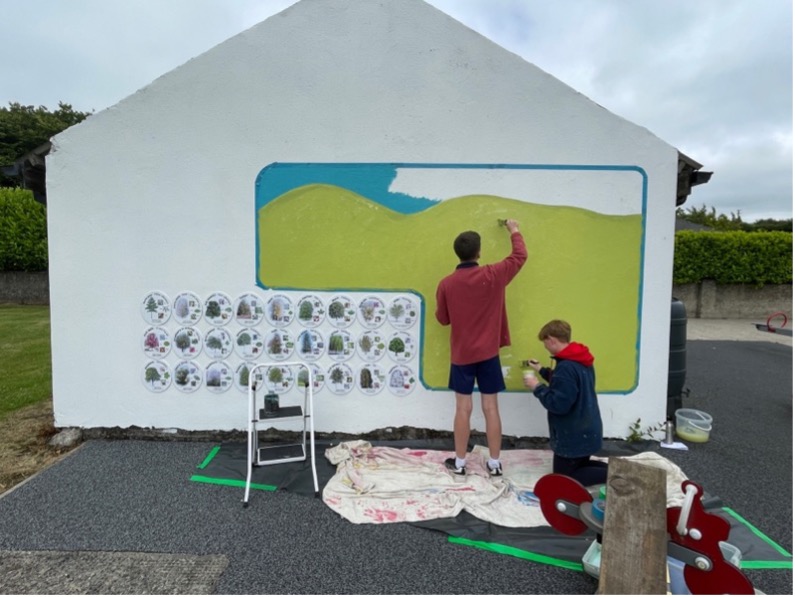
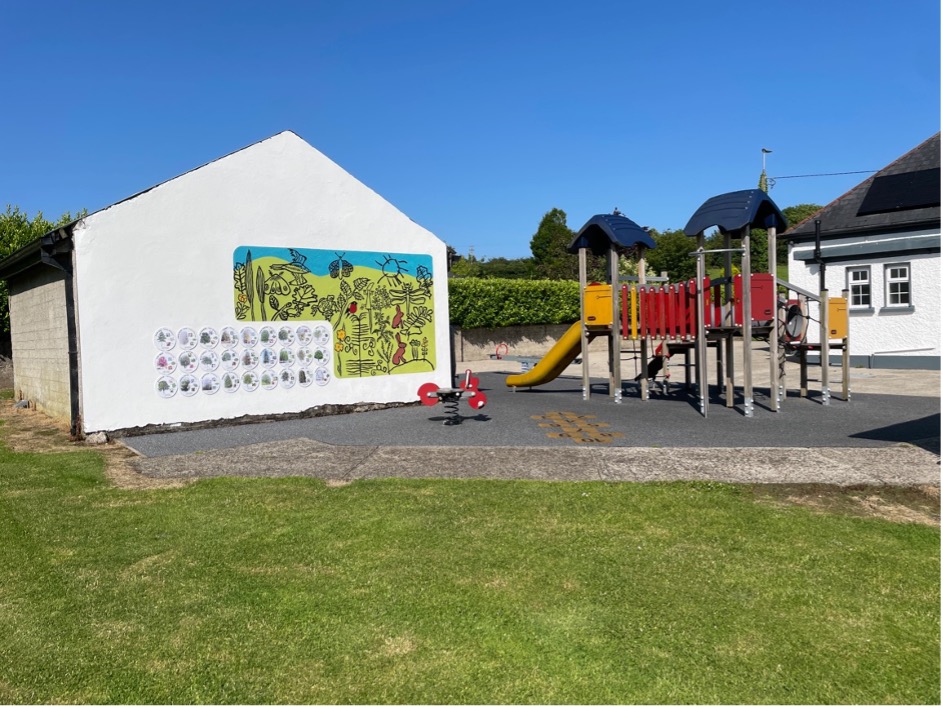
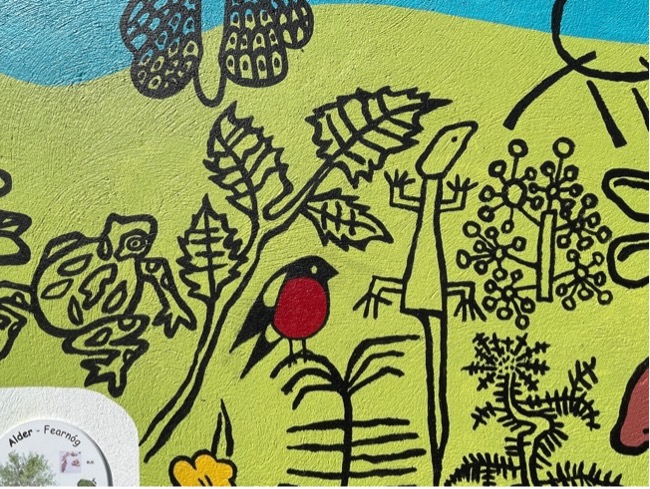
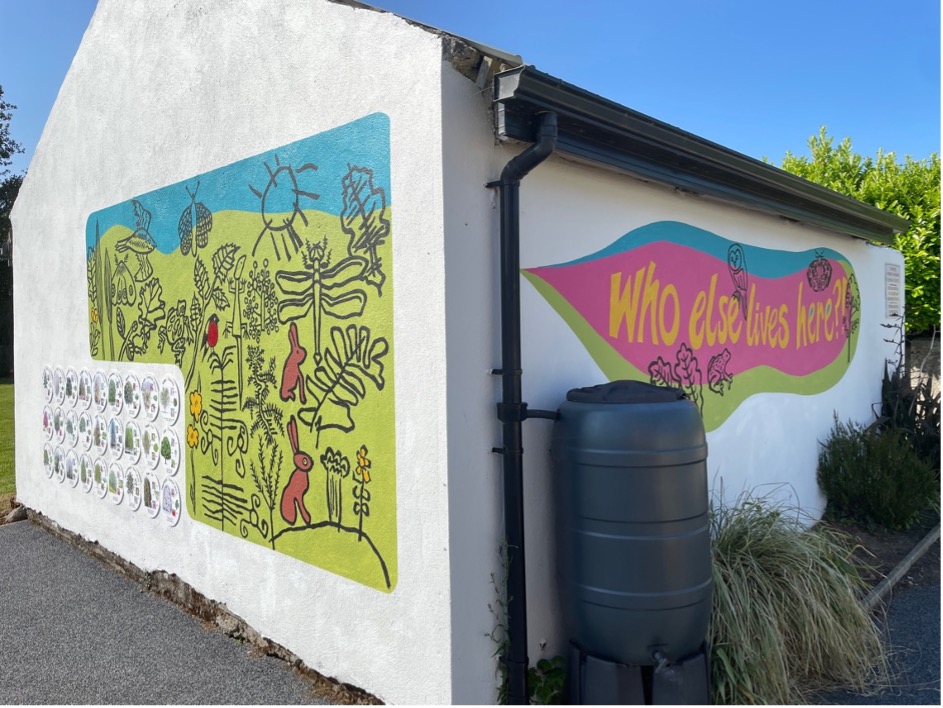
“Who Else Lives Here?” – the mural for St Brendan’s National School, Drummond, Co. Carlow:
While discussing potential creative options with St. Brendan’s N.S. the school proposed a mural as a symbol of the project in their school grounds; a permanent visual residue to the Lizard Mat. “Who Else Lives Here” had been a theme running through the project. As the students were weaving their individual ‘refugia’ we chatted out together ideas around being interlinked – not just us humans – but the critters too – the flora and fauna – that moves (as we do too) through the landscape – between their gardens, the school grounds, Drummin Bog. We integrated this question into the mural, along with one motif taken from each pupil’s artwork.
Final thoughts:
Valuable time in the National Museum of Ireland, Turlough Park and the subsequent research embedded The Lizard Mat with a reservoir of potential themes and creative actions for Drummin Bog and its hinterland for the future. The time spent in St. Brendan’s National School and being on Drummin Bog with the pupils reinforced earlier relationships and extended this unique connection between the school and Drummin Bog for now and into the years ahead.
Acknowledgements:
All this could not have been achieved without the support of the Carlow Arts Officer, Aileen Nolan; Carlow Arts Services staff, and Caitriona Roberts, Creative Ireland Carlow Coordinator.
I am most grateful for the support from the Drummin Bog Project committee, my colleague Dr Cathy Fitzgerald and my two fellow Gnáthóga Nádúrtha artists, Monica de Bath and Kate Flood.
Thank you to the National Museum of Ireland, Turlough Park for their warm welcome, and generous access to their wonderful library.
Thank you also to Tasneem Khan, for her wonderful enrichment of the school’s visit to Drummin Bog, and for her generous sharing of knowledge, tech support and fun.
A particular thank you to Aoife Kavanagh (Principal) and the staff of St. Brendan’s National School; and especially to the children themselves. Thank you, also, to Drummond Hall and its committee.
Grateful thanks to Rob Gandola for opening up the world of lizards and their habitats, for us all to enjoy and respect.